
Conference 2025
AGENDA
Full Agenda
View the full agenda for both days of the 2025 Conference below, including themes, speaking times, and details about the Game Demo and Presentation night on Saturday.
Join Us in Rochester, NY
Join us for two days of discussion, networking, research, and fun at the Strong Museum, devoted to the history and exploration of play.
Attendance Options:
- General Admission – $200
- Student/Adjunct Faculty/K-12 Teacher Rate – $100
* Inquire about group rate discounts
Friday, October 3: Pre-Conference Early Arrival Dinner
5:00 PM – 8:00 PM: Dinner
For early attendees, join us for an optional meetup at the Owl House (https://www.owlhouserochester.com), just a 4-minute walk from the hotel. This is a relaxed setting to meet fellow early arrivals, enjoy good food, and kick off the conference experience with conversation and camaraderie.
Saturday, October 4: Day One
Theme: Play as Identity, Learning, and Cultural Memory
Day One explores how tabletop games reflect and shape identity, learning, and culture. Sessions delve into unconscious play, educational design, and storytelling to reveal how games act as mirrors, tools for growth, and carriers of collective memory.
8:00 AM – 10:00 AM: Complimentary Hot Breakfast & Museum Arrival
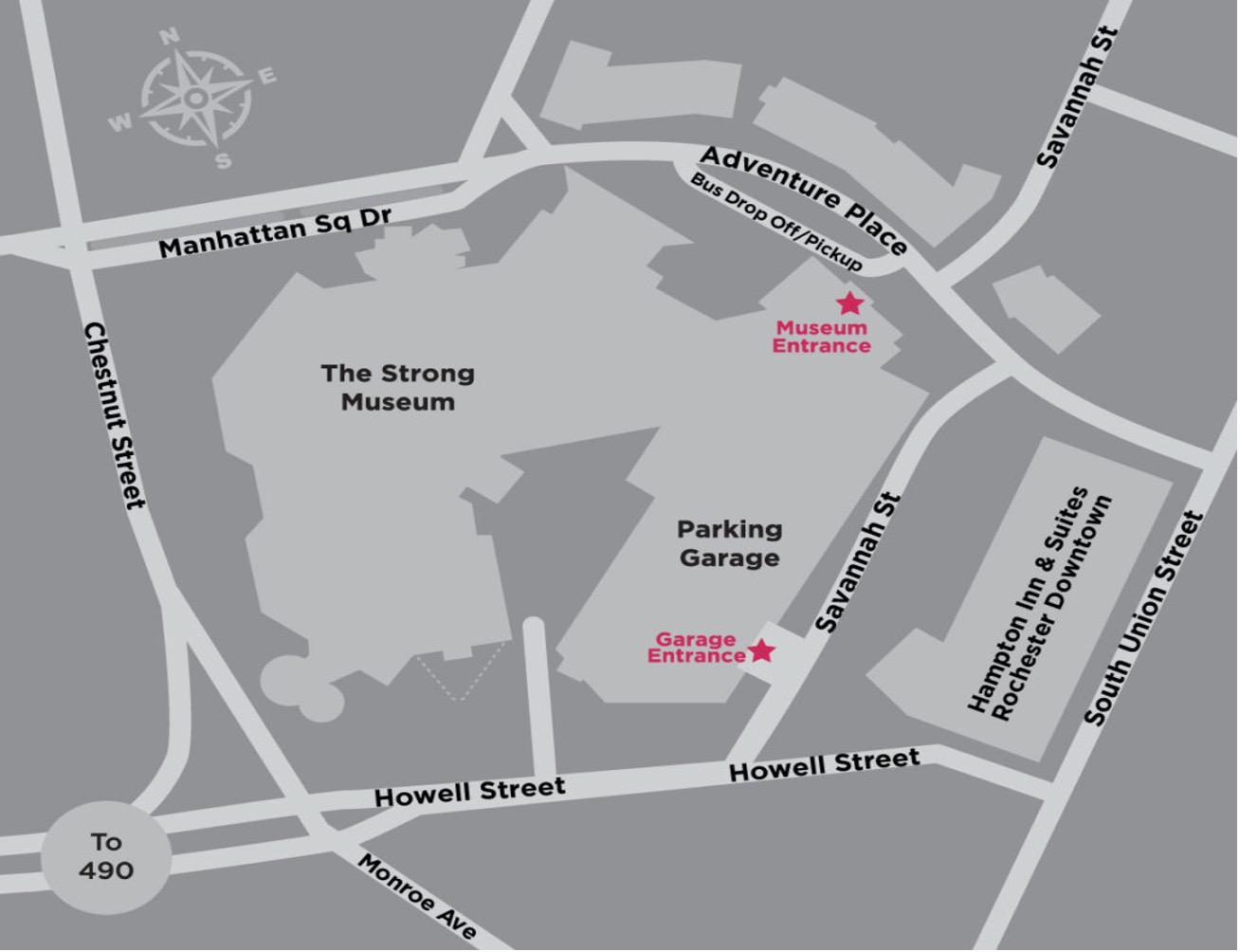
Start the day with a complimentary hot breakfast buffet at the hotel. Afterward, head to the museum to check in at the registration table at the Garage Entrance starting at 9:00 AM. This gives you ample time to enjoy breakfast, connect with fellow attendees, and settle in for the day’s sessions.
10:00 AM – 10:10 AM: Welcome Address: Christopher Carbone & Anthony Chatfield
A formal welcome and introduction to the conference themes, objectives, and structure from the founders of Board Game Academics.
10:10 AM – 11:00 AM: Keynote Address: Eric Zimmerman
Game designer and professor at NYU Game Center. Co-author of Rules of Play, co-founder of Gamelab, and co-founder of The Institute of Play. Creator of influential games, including The Metagame and Diner Dash. His work bridges tabletop, digital play, and game-based learning.
Most likely, you don’t just play games – you study them, educate others about them, and even invent new games. This workshop-style session will lead us through a hands-on tabletop game design exercise, as a way of thinking about how design, pedagogy, and research can playfully intersect.
11:00 AM – 1:00 PM: Academic Session I: Games, Identity, and Cultural Imagination
Exploring how tabletop games reflect, critique, and shape cultural norms, personal identity, and social power structures.
- Lacan Plays Catan: Unconscious Desire in Tabletop Gaming
Paul Hoard, PhD, LMHC – The Seattle School of Theology and Psychology
This presentation uses Lacanian psychoanalysis to explore how unconscious desire shapes player engagement in tabletop games. Bridging theory and practice, it highlights games as symbolic spaces for therapeutic insight, self-awareness, and meaning-making. - “Laws Are Threats…”: The Cubbys, Marxist Ideology, and the Politics of Humor in Dimension 20’s Fantasy High
Mx. Tarae McQueen – San Francisco State University
This presentation analyzes how Dimension 20’s Bud Cubby monologue embodies Marxist ideology and anarcho-socialist values. It explores the role of humor and political messaging in Fantasy High, revealing deeper character development and narrative commentary. - Roleplaying Games, General Education, and Understanding Culture
Stephanie Hedge – University of Illinois Springfield
This presentation discusses an upper-division general education course that uses global role-playing games to explore culture, power, and difference. It highlights pedagogical strategies and course content, including Filipino-designed RPGs, to promote intercultural knowledge and engagement. - Around the Round Table: Fellowship and Cultural Longing in Arthurian Tabletop Games
Camille Deschapelles – Georgetown University
This presentation examines how Arthurian-themed TTRPGs use medieval myths to explore fellowship, loss, and cultural longing. Drawing on theories of play and participatory medievalism, it reveals how players reshape legend to reflect modern social anxieties and desires for connection.
1:00 PM – 2:00 PM: Lunch Break
Take a break to refuel and talk with fellow attendees. Grab a bite at the museum’s at the museum’s Main Menu food court, Puppy’s Game Café, or Bill Gray’s Skyliner Diner. If time allows, wander through the exhibits to inspire new ideas. This informal setting is the perfect way to continue conversations from the morning sessions and build connections across disciplines and professions in the tabletop gaming community.
2:00 PM – 4:00 PM: Academic Session II: Games as Tools for Learning and Cognitive Growth
Presentations that analyze or apply tabletop gaming in educational and psychological development contexts.
- The Cognition of Game Playing: Learning Cognitive Psychology by Playing Board Games
Dr. Stephen Blessing – University of Tampa
This presentation outlines a college course that uses board games to teach core concepts in cognitive psychology. In an engaging, hands-on learning environment, students explore perception, memory, and decision-making through gameplay, discussion, and game design. - Leveraging Gameplay for Cognitive Skill Development and Active Learning: The Educational Potential of Nine Tiles Extreme
Jenny Yanzhi Wang – Columbia University / NYU
This presentation examines how lightweight board games like Nine Tiles Extreme promote cognitive flexibility, executive function, and active learning. Combining time pressure, strategy, and social interaction, such games offer engaging, hands-on tools for skill development in educational settings. - Mapping Common Core Math Standards onto Tabletop Game Mechanics to Enhance Age-Appropriate Gameplay
Jonathan Croft and Catherine Croft, Ph.D. – Catlilli Games, Nysmith School
This presentation analyzes how children’s mathematical fluency aligns with tabletop game mechanics, using Common Core standards to assess age-appropriate gameplay. It offers practical insights for designers to better match game complexity with players’ developmental readiness.
3:30 PM – 8:00 PM: Evening Program: Play in Practice at The Strong
Join us for an immersive evening at The Strong National Museum of Play, where scholarship, play, and community unite. Take advantage of numerous opportunities to connect, learn, and explore at your own pace.
➤ Game Demonstrations, Learning, & Play
Join us for dedicated game demo sessions, where attendees can learn new titles and experience innovative designs firsthand connected to the practical applications of games. These sessions provide an opportunity to play, ask questions, and connect with publishers and fellow gamers in a hands-on setting.
➤ Explore the Museum
Step into the National Museum of Play, a world-class institution dedicated to preserving and celebrating the cultural history of play. Explore exhibits that reveal how games, toys, and storytelling shape learning, creativity, and community. Engage with collections that connect generations through the shared language of imagination. Discover a space where scholarship meets wonder, and where play continues to inspire the future.
➤ Archives Tour
This guided visit opens the doors to the vast collections not on display, including rare toys, games, and cultural artifacts preserved for research and scholarship. Discover how these treasures are cataloged, studied, and cared for, and gain a deeper understanding of the history of play beyond what visitors see in the galleries.
➤ Dinner Break
Attendees are encouraged to grab dinner at the museum’s Main Menu food court, Puppy’s Game Café, or Bill Gray’s Skyliner Diner and explore more exhibits. Whichever you choose, it’s an excellent opportunity to connect with fellow attendees and share insights from the day’s events and exhibits.
Sunday, October 5: Day Two
Theme: Systems, Design, and the Transformative Power of Play
Day Two shifts from reflection to action, exploring how games model real-world systems, challenge norms, and inspire change. Sessions focus on meaningful mechanics, transformative play, and interdisciplinary design, culminating in a dialogue between academia and industry on using games for research, education, and impact.
8:00 AM – 10:00 AM: Complimentary Hot Breakfast
Start Day Two with a hot breakfast buffet at the hotel. Reconnect with fellow attendees, share highlights from Day One, and gear up for an exciting second day of sessions and exploration. The museum doors open for us starting at 9:00 AM.
10:00 AM – 12:00 PM: Academic Session III: Games as Mirrors, Models, and Mechanisms for Human Experience
A series of presentations delivered remotely, highlighting international perspectives and remote scholarship in game-based learning and research.
- Endgame: Playing at Dying
Dr. Laura Davies – University of Cambridge, UK & Dr. Emma Reay – University of Southampton
This presentation explores how tabletop game design can support conversations around death and dying. Drawing from interdisciplinary workshops and a new narrative card game prototype, it makes a case for “grief play” as a therapeutic tool in end-of-life care and bereavement support.
- A Framework for Analysing Board Games and What They Say About the World
Ian Greener – University of Glasgow
This presentation proposes a new analytical framework by synthesizing the work of Bogost, Gee, and Bacchi to examine how board games represent and argue about real-world issues. Using Clinic Deluxe and Dice Hospital as case studies, it highlights board games as rich tools for social analysis.
- Dungeons, Dragons, Difficult Deliberations: Campaign Settings and Contemporary Considerations
Pascal Verheul, MA – Nottingham Trent University
This presentation explores how D&D campaign settings serve as speculative spaces to engage with real-world issues. Focusing on Obojima: Tales From The Tall Grass, it examines how fantasy worlds can reflect and critique ecological and posthuman concerns through immersive play.
- Gamification as an Educational Tool
Christopher Rondeau – University of Tulsa
This presentation explores how tabletop role-playing transforms the teaching of literature, history, and philosophy into immersive, participatory experiences. By embodying characters and making narrative-based decisions, students deepen critical thinking and emotional engagement with complex human stories.
12:00 PM – 1:00 PM: Lunch Break
Continue Day Two conversations over lunch at the museum’s Main Menu food court, Puppy’s Game Café, or Bill Gray’s Skyliner Diner.. If time allows, explore the exhibits for creative sparks, but be sure to return for the afternoon sessions. It’s a great way to connect with fellow attendees and keep the ideas flowing!
1:00 PM – 3:00 PM: Academic Session IV: Design, Systems, and Transformative Play
Focusing on how games are constructed, how they mediate systems of meaning, and how they can be used for broader transformation.
- Mapping a Nation: Nineteenth-Century Board Games and U.S. Cultural Identity
Vanessa Cozza – Colorado State University
The presentation and publication compare two nineteenth-century board games published in 1822: Lockwood’s The Travellers’ Tour Through the United States and Parker’s The Geographical Pastime of the Complete Tour of Europe. These board games reflect the ongoing process of reinventing and redefining American society through cultural artifacts. - Cards Against Humanity and the Ethics of Algorithmic Curation in Analog Games
Dan Tibbles – University of Washington
This presentation argues that Cards Against Humanity operates like an analog algorithm, curating humor through social validation and crowd dynamics. It examines how the game’s mechanics mirror digital content moderation, reinforcing cultural biases and normalizing transgressive discourse.
- Representing Folklore: The Rakshasa in Western Tabletop Games
Caleby Levy – New York University
This presentation traces the transformation of the Rakshasa from Hindu mythology to a Western tabletop trope. It examines how games like D&D and Magic: The Gathering reshape and disseminate folklore and explores this shift in representation’s cultural and ethical implications.
- The Sustainability Lens Game: Using Storytelling as a Creative Development Tool for Connection and Change
Tamara Stenn – Suffolk University
This presentation examines how The Sustainability Lens Game uses storytelling to deepen understanding, foster empathy, and inspire creative problem-solving around sustainability challenges. Through case studies and theory, it highlights the game’s role as a tool for learning and real-world social impact.
3:00 PM – 4:45 PM: Panel Discussion: The Game Manufacturers Association (GAMA)
Title: Academics Working with Industry: A Conversation with GAMA
Hosted by the Game Manufacturers Association (GAMA), this panel invites academics, game designers, educators, and practitioners to engage in an open conversation about building stronger bridges between the tabletop gaming industry and applied scholarship. GAMA representatives will share how the trade association supports collaborations with researchers and professionals who use games in education, therapy, community engagement, and other real-world settings. The discussion will highlight the shared value of academic-industry partnerships, showcase successful examples, and explore ways to overcome common barriers. Attendees will learn how their work intersects with industry initiatives and how GAMA can serve as a hub for connection, innovation, and mutual growth.
4:45 PM – 5:00 PM: Closing Remarks: Christopher Carbone & Anthony Chatfield
Summary of key insights, acknowledgments, and announcements regarding future Board Game Academic initiatives.
5:00 PM – 8:00 PM: Post-Conference: Friendly Local Game Store & Dinner
End the conference on a high note at Dice Versa (https://www.diceversagames.com), a 7-minute walk to the local tabletop gaming café! We have a reserved room in the back. Dive into some friendly games, grab dinner, and keep the conversations going with fellow attendees in a relaxed, fun way to share final takeaways and celebrate connections across the tabletop gaming community.
Join Us on October 4 and 5
Register to attend the conference on October 4 and 5 from the link below. Early bird tickets are available at a discounted rate using the code EarlyBirdDiscount until May 31, 2025. Students and adjuncts are eligible for a discounted rate. Please contact us for additional details.