
Board Game Academics, March 2026
Published in Vol 3. Issue I.
DOI: https://doi.org/10.70380/ab7x9kq4r2t6
Patrick Munnelly
Community College of Aurora
INTRODUCTION
Game-based pedagogy is best summarized as a learning or educational environment that takes place over or through a game. Shultz Colby (2017) describes a variety of ways in which games can be used and implemented in a classroom, and, modeling a game-based pedagogy, Hodgson (2013) built a class around and through a massive multiplayer online role-playing game, in which students actually played the game as part of the course design. Game-based learning environments differ slightly from gamified ones (Munnelly, 2025c), which are described as the application of game elements to a non-game environment (Basten, 2017). As Dah et al. (2024) note, gamification has the potential to create shallowly gamified classrooms with a simple badges, points, leaderboard (BPL) structure, often framed through only Self-Determination Theory (SDT) or Flow Theory. Other studies have also shown that neither SDT nor Flow Theory is the right framework to view game-based classrooms, a finding this study supports (Chapman et al., 2025; Munnelly, 2025c).
Henry et al. (2024) compare and contrast (and uses somewhat interchangeably) these two terms–gamification and game-based–but notes that they both result in improvements with class, which is consistent with the findings of Chapman et al. (2025), who summarize: “Impressively, the gamified course design showed more than a 65% decrease in withdrawals and dropouts, a 47% decrease in failures, and a 10% increase in grades” (p. 429). A classroom based on some element of a game, whether that is teaching through a game or teaching using game elements, can be broadly considered as a type of play-based pedagogy, which Leather et al. (2021) summarize as going beyond simply playing games, but rather the incorporation of playfulness (or a playful ontology) into a classroom environment. Play-based pedagogy could even extend beyond games and incorporate other playful media like comic books (Strong et al., 2023).
This article uses the operationalized term “game-based,” while not asserting a hierarchy of pedagogies or definitions, since the primary implication of the study is the play of a board game in the classroom. Lieberoth (2015) suggests that, to achieve a full effect for students, the context for playing games in the classroom cannot simply be a mechanical overlay of games on the curriculum. For board games specifically, Germaine and Wake (2025) describe the role they play in shaping critical literacy and action research because board games “take place, typically without resistance, …from a pre-coded game system put in place by developers” (p. 7). Further, they also state that board games are “typically seen as a harmless activity, even beneficial for learning” (Germaine and Wake, 2025, p. 7). Additionally, as noted by Katsantonis (2025), “[b]y integrating these mechanisms and dynamics with learning principles, BGs can provide entertaining and educational productive experiences” (p. 11).
As declared by Hromek and Roffey (2009), games in general can teach socioemotional skills and “provide the potential for transformative learning through social interaction, social connectedness, cooperation and collaboration, and possess many of the features that encourage student well-being and resilience” (p. 641). Shultz Colby (2017) suggests that playing games can illuminate the theories sought after in the classroom, and Fields (2025) also suggests, in their class, that it is the nature of the TTRPG (table-top role-playing games) format that allows for philosophical debates, and thus philosophical classroom content to emerge through gameplay. Further, Fields (2025) suggests that “bleed” as a concept (Care Boss, 2007; Hugaas, 2024) can be leveraged in educational settings through games for students to become more emotionally invested in the class. Using what Lieberoth (2015) lists as the ‘Full Game (high mechanic, high frame)’, I contend that this article supports these outcomes from Hromek and Roffey (2009) through the games-based learning environment of playing a board game in the classroom to more deeply unpack classroom concepts, as the results are shown through the emergent element of bleed. Furthermore, I also assert that the nature of the chosen board game fosters a conflict-heavy environment through horror/Gothic elements that enable classroom concepts to emerge.
The Game: Betrayal at House on the Hill
Betrayal at House on the Hill (Third Edition) (Avalon Hill, 2022) is a semi-cooperative horror game for 3 to 6 players. I utilized the third edition for class (with enough copies purchased for the whole class to play). In phase one of the game, the explorers of the haunted house build the map by uncovering different rooms and triggering different events. Each map is built by the players and, therefore, not preset at the start of the game. Eventually, enough room tiles are overturned to trigger phase two of the game, which is called the haunt. Depending on the room and omen card drawn, for example, the Chapel and the Dog, respectively, will trigger one of 50 possible scenarios. Some of the scenarios are cooperative, i.e., all players against the house; some of the scenarios are one player (the traitor) against the other explorers; and some of the scenarios are a free-for-all, i.e. all players against each other. Several of the scenarios in Betrayal employ Gothic tropes such as vampires, werewolves, and ghosts, while others require books to be burned, runes to be gathered, or altars to be summoned; the whole game takes place inside a haunted house, complete with false walls and traps.
In all, this game is fun but challenging. Some of the rules, like movement, line of sight, and attacking, are challenging to learn. As well, some of the phrasings in the rulebook can be clunky and unclear to first-time players. Despite the possible difficulties, I chose this game because it is one of the few board games I know of in which players make their own map, while offering enough scenarios to ensure any one permutation is unlikely to be repeated. Also, with an understanding of gameplay, this game can be completed in the allotted class time. Ultimately, those features, along with the Gothic elements that foster a fruitful storyline, such as being chased by a mannequin or rooms of the house catching on fire, the game appeared to prove as a useful tool for a game-based classroom. Essentially, this game was not chosen at random. Both the literal ludic elements (the semi-cooperative gameplay, the expanding map, and the multiple scenarios) and the narrative elements (the Gothic storyline) were selected by the instructor to enhance the lessons practiced in the Interpersonal Communication classroom.
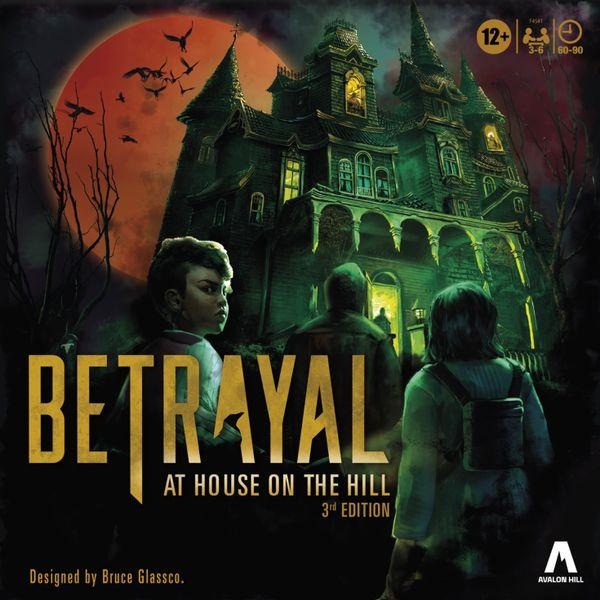
Figure 1
Picture of the Box Cover Graphic (Credit: BoardGameGeek.com).
The Class: Interpersonal Communication
The board game was chosen to be played specifically for an Interpersonal Communication class at the Community College of Aurora, USA. Interpersonal Communication is a broad course that encompasses many theories. The course description is listed as: Examines the communication involved in interpersonal relationships occurring in family, social, and career situations. Relevant concepts include self-concept, perception, listening, nonverbal communication, and conflict. Furthermore, interpersonal communication is a fairly broad category of communication that primarily involves students talking and interacting with one another. This particular study (and play of the game) happens in an in-person class, several times over the course of the semester, as part of classroom skill-building rather than as a test for skill-acquisition.
Gothic Board Games and Magic Circles
I hoped the magic circle of gameplay would simulate (and stimulate) more realistic conversations, rather than awkward and uncomfortable practice scenarios. Wagner (2014) builds on Huizinga’s (1944) definition of the “magic circle” further to say that it becomes a fusion point for a ritual or sacred space to occur, such as the one happening over the interaction of the mystical game. As Germaine (2022) alludes to, many RPG games form two magic circles: 1) the circle of game play in the manner employed by Huizinga, and 2) the magic circle of ritual (witchcraft, summoning, teleportation). Betrayal, for example, often features rituals and summoning in the storyline, staircases or traps that teleport people around the map, and other occult, technological forms of magic circles. Therefore, Betrayal as a board game acts as both an invitation to play within the magic circle and a means of learning through the conflict/communication that arises when playing a game about magic circles, thereby becoming an occult technology (Germaine, 2022).
Interestingly, according to Hazel et al. (2022), survival horror video games were rated highly “on emotional wellbeing, competence and relatedness” (p. 30:4), showing that despite the possible negative outcomes associated with the horror genre, such games still showed benefits for people emotionally. Other scholars have also concluded that horror media more broadly has also been shown to be emotionally and intellectually stimulating (Clasen et al., 2018). Hartless (2021), for example, used horror media in class to teach about queer sexualities. Viewing this game and classroom with the interdisciplinary lens of the Gothic assists, as these other studies do, show that something uncomfortable (horror) can help us grow, which is important in an educational setting.
Worth consideration is how bodily co-presence (Munnelly, 2025b) is needed to support these notions of the magic circle, since the students are engaged in the gameplay in their own magic circle within the classroom, adjacent to other groups playing within their own magic circles. In terms of the argument around bodily/non-bodily copresence, there seems to be some disagreement. For example, Mizrahi-Warner et al. (2024) state that online social interactions can be just as beneficial as in-person ones, suggesting that bodily co-presence is not needed for games. This is in contrast to Vine (2023), who states “[i]rrespective of how sophisticated our virtual communication technologies become, there remains a deep-seated human compulsion for physical proximity” (p. 393). Both of these concepts reflect the ways collective effervescence is a byproduct of the social interaction ritual, as noted by Collins (2014). This notion of an in-person environment is supported by the fact that registration for the in-person class is voluntary and that online Interpersonal Communication classes are offered at this school. Therefore, keeping in mind the above, the study proceeds with an understanding of the perception of value by playing the board game in class, together, in real time, among their own chosen “magic circles” of classmates, and how this affects the takeaways each student interviewed experienced by playing this board game in the classroom with peers.
Research Question
I believe any classroom and any game combination could be used to match this study, but the nature of a conversation-heavy classroom, like Interpersonal Communication, lends itself to a supportive framework for structuring a game-based classroom. In other words, how do students view this forced gameplay versus simply entering the magic circle of their own volition? Thus, this brought me to my research question: How did past students view the value of playing the board game Betrayal in Interpersonal Communication class?
Methods
This study follows a phenomenological approach that seeks to understand shared experiences (Merriam and Tisdell, 2016). Merriam and Tisdell (2016) describe how phenomenological studies set aside prior beliefs “about a phenomenon of interest [that] are temporarily put aside, or bracketed, so as not to interfere with seeing or intuiting the elements or structure of the phenomenon” (p. 26). Tracy (2020) adds to this notion by stating that researchers must “first be aware of their biases and habits” (p. 65). In my own research, I have reflected on my identity and makeup in the classroom (as is reflected in this study on playing board games). Munnelly & Geddes (2026, forthcoming) encourage all instructors to determine their own pedagogical implications based on their identity and how they bring that into their classroom; this study also demonstrates the long history that my Department Chair and I have with engaging in deeply sustained pedagogical research and implications. For me personally, this is a “gaymer pedagogy” (Munnelly & Geddes, 2026, forthcoming) that is highly influenced by Queer Game Studies (Ruberg and Shaw, 2017).
In the very recent and incredibly thorough book Historiographies of Game Studies, Karabinus et al. (2025) capture just how large the field of game studies has grown. They note “one cannot read or do all the things related to games, and keeping current with games research in just a few disciplines is often beyond individual scholars’ capacities” (Karabinus et al., 2025, p. 32). Instead of picking and choosing subfields and disciplines, they ask readers and thus scholars to engage with their biases by asking: “What could game studies look like if it prioritized play, experimentation, and learning beyond one’s expertise rather than enforced specialization and mastery? …As we play, observe, write, design, and teach games, we always do so in a specific context and from a position within systems of interlocking power” (p. 33). Therefore, I place my own positionality within the context of the scholarship I have read and thus used to design this study, rather than simply capturing a non-exhaustive list of all studies that have come before me.
This study uses the primary data collection tool of interviews, along with equal-weight analytical approaches (Merriam & Tisdell, 2016). As will be shown in the analysis that follows, Tracy (2020) also states that “Hermeneutic phenomenology… analyzes how experience is subjective and closely linked to humans’ use of language in context” (p. 66). Thus, this study seeks to not only share participants’ own voices through emphasis on quotes, but also the whole study is self-reflective in the context of the phenomenon of what is taking place in the classroom where students are playing board games. As both researcher and professor in question, I employ the use of the first person in this study to more closely adhere to the phenomenological approach in which qualitative research is situated to illuminate human experience, as well as to reduce the bias of my role as both educator and researcher.
Data Collection
Since the phenomenology of this research searches for the experiential phenomenon of being inside a specific classroom, participants were selectively sampled through prior students who had completed the class in the past semesters. IRB was obtained for this study. I taught six classes over five semesters, which could have resulted in a maximum sample pool of 150 students, as the course caps are 25. The total number is actually below this, since student enrollment fluctuates below the maximum number allowed to enroll. The absolute total number cannot be accurately determined as the system does not retain student records after they graduate. Additionally, an unknown number of students were under eighteen years old as concurrently-enrolled high school students and were therefore excluded from the study.
Data was collected primarily through semi-structured interviews conducted in person. Tracy (2020) states that “semi-structured interviews are more flexible and organic in nature” (p. 158). The main interview sheet had a list of questions (topics) to cover, but the semi-structured nature allowed the researcher to probe for further details or follow a line of inquiry brought up by the interviewee. Interview prompts ranged from “what do you remember about the board game in the classroom?” to “how has this style of classroom helped/hurt you in your subsequent classes?” and everything in between about remembering the environment, the style of play, the lessons discussed, and more.
Recruitment
Two rounds of emails and two rounds of text messages were sent via the electronic student management software for selective sampling to recruit participants from the past pool of students, with noted exceptions. Participants who volunteered to participate were contacted to set up a time to meet in person. The interviews were conducted in person from my campus office, with the exception of one, who met at a coffee shop during a work break, and another, who met at a different campus location due to class time constraints. Each interview lasted under an hour, and participants were thanked for their time with a coffee, soda, or treat from the cafeteria of their choosing, amounting to no more than fifteen U.S. Dollars per person.
Participants
Fifteen participants (N=15) volunteered to participate, or roughly 10% of the maximum possible sample pool. One volunteer was removed for being under 18 years old. One participant was removed after the interview stage because their answers were consistently off topic, referencing personal problems during the class rather than the board game itself. Three additional participants were screened out during the analysis because they could not recall enough specific details of the board game (such as goals, format, group members, or gameplay scenarios). The final result was 10 participants who were interviewed, transcribed, and analyzed (n=10). The transcripts were recorded and transcribed with Microsoft Word, followed by manual cleaning of the transcripts. Analyses were also conducted manually using Constant Comparison Analysis (Glaser, 1965).
Table 1 shows the final list of participants present in the study. The code names were randomized using Florence and the Machine songs to maintain anonymity. Additionally, students were asked only for age as an identifiable demographic, given the small population and the ease of identifying additional characteristics such as race, gender, and sexuality. Some students volunteered demographics throughout the interview that they felt were important to be made known, and these are collected in the last column. In general, members represented a wide variety of gamers, genders, sexualities, and races.
The total population of the school is primarily minority-serving, with mainly Hispanic and Latino students, with an equal number of Black and White students. More female students are present on campus than not female. Neurodiverse and LGBTQ identities are not tracked institutionally.
Table 1
Participants
| Number | Code Name | Gamer Y/N (self described) | Age | Type of Student (Self Reported) | Voluntary Demographics |
| 1 | Daffodil | Kind of | 24 | Good | Neurodivergent; Non-binary |
| 2 | Delilah | Yes | 18 | Average | Concurrent Enrollment |
| 3 | King | Yes | 24 | Above Average | Middle Eastern Man; low income |
| 4 | Mother | Yes | 41 | Good | N/A |
| 5 | Rabbit Heart | Yes | 23 | Average | N/A |
| 6 | Patricia | Both | 18-20 | Excellent | Queer; Neurodivergent |
| 7 | Cassandra | Yes | 29 | Good | First Generation |
| 8 | Grace | No | 19 | Average | N/A |
| 9 | Elvis | No | 28 | Great | Married gay man |
| 10 | Jude | No | 42 | Good | Immigrant |
Analysis
Constant Comparison Analysis (Glaser, 1965) is a method of qualitative data analysis that applies the phronetic iterative approach mentioned by Tracy (2020). Constant Comparison Analysis takes all of the data and applies equal weight by breaking up all of the transcripts into chunks and open-coding the phrases. Following the open coding phase, an axial coding phase groups the codes together by like-minded themes. Following, the selective coding phase selects, sorts, and orders the codes into main themes. The open coding phase had sixty-one unique phrases. The axial coding phase organized these codes into like-minded groupings such as the mentions of the game and/or game difficulty, the classroom and/or people in the classroom, or even the lessons from class and or specific classroom phrases (i.e., conflict, nonverbal). Following, the selective coding stage organized these into three main categories (themes): “Betrayal, as a board game”, “The game-based classroom”, and “Co-presence in the classroom”, with the axial themes organized underneath these two headings. These will be discussed in detail below as results. In the member-checking phase, the member reflections resulted in participants being presented with the emergent themes as the analysis was being constructed, offering a step for further reflection and clarification. The results below contain the post-member reflection conclusions.
Results
The results of this study provided valuable information for teachers who wish to use board games in their classrooms. As this study seeks an understanding of the phenomenon of one board game in one classroom, the transferability of this study is dependent on the ways in which future teachers and classes wish to implement the same themes, lessons, board game, or approach. Instead of focusing on the transferability of the results to other classrooms, I want to emphasize the importance of how the students interpret the experience, how they view the situation, what their takeaways are, and their main thoughts reflecting back on this classroom experience. In general, it should be interpreted that these results confirm, much like the literature states, that game-based classrooms are effective (Germaine & Wake, 2025; Fields, 2017; Hogson, 2013; Shultz Colby, 2017).
The approach to organizing the results section was also modeled on Freeman and Acena (2022), emphasizing participant quotes while providing an analytical roadmap for the reader. The main themes to emerge from this study were the concepts of 1) Betrayal, as a board game; such as the difficulty of this game, and the game as an ice breaker; 2) The game-based classroom, such as the ideas conflict is present everywhere, that learning is not a test, and lectures are boring; and 3) Co-presence in the classroom, such as the game environment as a real place, and the phenomenon of bleed. The results section below presents the main themes with their subthemes, highlighted by student quotes for each section that exemplify the themes found through the coding process.
Betrayal, as a board game
Expectedly so, the interview responses revolved primarily around games. Most of the discussion focused on Betrayal, but sometimes people referenced games in general, or even other games. Monopoly, as a compared-to-game, came up in half of the participants’ transcripts. King (a gamer) and Jude (not a gamer) both mentioned how games in general helped them through rough patches in their lives, noting broadly that games affect them positively.
King: “So [playing games] definitely helps to like get my mind off of things when stuff is getting like overwhelming.”
Jude: “A couple of games have helped me sort of through harder times.”
To frame out this game-based environment, it is helpful to capture the commentary that students presented, which showed they viewed games in a good light.
The difficulty and learning curve
Many of the students stated at various points that the game was either difficult in general, difficult to learn, or caused general group confusion. This category suggested that, while the game did have a learning curve, students had hoped for an ‘easier’ and ‘more fun’ time in the classroom instead of being challenged to use their problem-solving capabilities. Delilah, Rabbit Heart, and Grace share three different perspectives that frame this category.
Delilah: “It wasn’t a straightforward one that you usually have for board games. It was more of a you learn as you play.”
Delilah here shares with us that the game is complex, but one that is followed the more it is played. This “learn as you go” mentality echoes the format of most classrooms, where scaffolding of content becomes more difficult as students progress through the semester, as well as what Gee (2007) notes as the hurdle that comes with learning a new linguistic form of a game. This is echoed through Rabbit Heart’s emphasis that the rules need to be read and understood.
Rabbit Heart: “Read the dang rules. I think that was one of the issues that a few groups might have had is like they just didn’t really read the rules or ask enough questions in terms of the rules [or didn’t] collaborate more with people.”
Rabbit Heart’s suggestion raises the point that the rule book was not utilized by groups to the fullest extent. Was this because reading the rules is boring? Do rule books help us frame out the game better, or does it detract from the diegesis of the world and thus remove the fun element? Also, even though students thought and suggested the game “should be easy and fun,” they appreciated that the complex nature of the game allowed for them to actually learn the materials, in turn also learning class concepts, rather than being spoon-fed the information. McGonigal (2011) states that challenges within games trigger the feedback system that sustains engagement. This was captured well by Elvis, whose discussion of the concept of “figuring it out” resembled real life.
Elvis: “And I think it was kind of smart of you to not like put it up on a board and say this is how the game is played like this is how to read the rulebook. It was just kind of just figure it out on your own. Much like life.”
This connected directly to other recurrent concepts from the interviews, such as working together, interacting with peers, or what students noted as an ice breaker.
Ice breaker
The students often noted that regular class conversations and interactions would feel stilted and boring. The game acted as an ice breaker and allowed students to let their guards down and actually communicate with one another. Students Grace, Elvis, and Jude (all non-gamers) shared sentiments that embraced the same ideas:
Grace: “But with the board game, you have a common objective. You have like basically an ice breaker.”
Elvis: “It made it a little bit easier too. I could have a conversation with someone using the board game as an ice breaker.”
Jude: “Whereas the games felt like we could kind of open up and be a little more comfortable and experience each other as we really are than, you know, stilted enforced interaction.”
The quotes here share that not only did students (who are not gamers) acknowledge the built-in experience of the ice breaker, but that it was the game, not classroom conversations, that was the ice breaker that shifted the dynamic of this classroom for them. As noted by McGonigal (2011), games can help to create communities. Further, Cross et al. (2024) state that for people with autism, the structure of a board game brings about more socialization and conversations. This fed into the next theme, where students discuss what they dislike about traditional classrooms and what they appreciated about this game-based one.
The game-based classroom
As stated in the literature, games-based classrooms are highly beneficial (Chapman et al., 2025; Munnelly, 2025c; Shultz Colby, 2017). Further, like Hartless (2021) states, horror media is also beneficial to learning. Thus, the interdisciplinary nature of a Gothic board game affirms what Germaine and Wake (2025) share about the benefits of a board game for an educational environment. This is echoed through the students who mention how much they like the board-game class versus what they consider to be “traditional” classrooms.
Conflict
While the class – Interpersonal Communication – has many chapters covering a range of topics such as Listening, Nonverbal, and Culture, students focused on Conflict as not only a key lesson but also a key component of board games. The students suggested that the nature of a board game is to foster conflict, but that this form of healthy conflict can encourage resolution, rather than further conflict. Interestingly, many students who noted their neurodivergent statuses said that they tend to avoid conflict, such as this quote from Daffodil.
Daffodil: “I feel like it allowed me to talk more in uncomfortable situations or be quiet in uncomfortable situations and just kind of like observe instead of just panic.”
Many students in the interviews noted that the lessons from class helped them employ conflict management techniques (such as listening skills or cooperation), instead of escalation of conflict. This is in line with Cross et al. (2024) and their associations with board gaming and people with autism, as experiencing social lubrication and other communication abilities. Mother captured this category well by exploring how they interpreted the conflict.
Mother: “There was a conflict due to a lack of communication amongst our group. So it was really good to be able to connect some of the things we were learning in class back to a real life board game.”
Mother’s quote here about conflict communication in general shared a nice overview of this category about the application of class concepts through the conflict that emerged over the gameplay. Following this, Rabbit Heart spoke of how even if they did not have a specific issue with the complexity of the game, that complexity for others provided an environment of ripple effects through all players in the game, experiencing conflict.
Rabbit Heart: “I didn’t have an issue with the complexity. I had an issue with the consequences of the complexity because my fellow players didn’t understand and then I had to explain it and gain their trust so we could all play.”
Except, Patricia states that it is not just conflict for the sake of it, but that the game infuses conflict into certain situations, such as during the haunt section of the game, where sometimes a traitor is a manufactured “conflict” in the game.
Patricia: “Obviously we were against the traitor and so that was like a conflict, but we also made it really, like, lighthearted, because we were constantly joking about them being the traitor. …Yes, it was a conflict and yes, we were pitted against each other. But it was also really fun because we brought humor into it.”
Even though this manufactured conflict was part of the game, these reflections on the conflict that emerged through the game design, group dynamics, or even misreading of rules suggested that this was a safe place to explore and learn about one another. These statements affirm the hypothetical goal I had as the instructor when choosing this game: to stimulate conversation via the magic circle. These simulated conflicts reaffirm the educational goals of the classroom and this game-based pedagogy. This was also echoed through the theme that this class did not require tests, but that the board game fostered a real place to learn, through the low-stakes environment.
Not a test
The participants were quick to note that the concept of testing a student is not actually the best practice, and they emphasized that the game allowed them to actually learn class concepts, to further display to me the knowledge gained. Patricia, Cassandra, and Jude share quotes for this category:
Patricia: “I remember it being way more fun than taking a test. And I really enjoyed like getting to know my classmates.”
Cassandra: “Because it’s better than quizzes. First and foremost. We actually learned stuff I feel like and it just showed us the different kinds of communication you can have in different situations.”
While these two quotes directly mentioned tests and quizzes, Jude more subtly applied this concept by stating that they saw the connection to the application of course concepts.
Jude: “The game forces us to be in situations where the content of the class was applied.”
The students felt that a college course was portrayed as a space in which students interacted primarily with the teacher through lectures and quizzes. For clarity, playing the board game was completely removed from assignments and points gathered in the class; it was only used as a skill-building activity between chapters. This board game presented students with a chance to contradict those preconceived notions by actually getting to know fellow students and practicing their skills over the board game, similar to the icebreaker notion. However, somewhat differently, the students emphasized that this board game felt like a low-stakes environment, in contrast to a testing environment, which is presumably high-stakes, as evidenced by Daffodil and Elvis.
Daffodil: “Being in a situation that isn’t the most comfortable, but in a very low stakes type of way. …and obviously like a board game like we’re not being graded on it.”
Elvis: “You can use this board game kind of just as a test of the teaching lessons for the culmination of classwork itself.”
In a sense, what the students are sharing here is that this class defied their expectations of college. Another way this idea is reflected is that students noted that lectures were boring and that playing the game was more fun.
Lectures are boring
Not only did the concept of boredom, or again the emphasis on stilted classroom interactions, come up, but students directly noted how the game time was not a boring lecture.
Many students mentioned that for a few hours a few times over the course of the semester, they were not just listening to me talk, such as the quote here from Cassandra.
Cassandra: “We weren’t like, oh we’re just gonna listen to Pat for the next 45 minutes. We’re actually going to try and figure this out.”
In fact, Grace shared a point about another student who opened up more, only because of playing the board game.
Grace: “Yeah, he started talking a lot more once we started playing the board game. And like before that he was like really quiet. So it was a big help for like relationship building.”
They often noted that this lack of lecture style allowed them to befriend people and actually try out the class materials in a variety of ways that defied their expectations of a college classroom, such as the quotes from King and Patricia.
King: “So it’s like an easy way for us to be able to like relate the lessons to what we’re doing as well as just like a fun way to do it. Because oftentimes when you’re just sitting in a classroom, things can get kind of like a little drab.”
Patricia: “We weren’t just like sitting side-by-side in class. Like, we actually got to make connections and have memories and that was really fun.”
Students seemed to emphasize this sense of not only the practicality of the board game (and thus the classroom), but also the ideas that the students were collected in the same space together, symbolizing the requirement of co-presence as a necessity for the magic circle.
Co-Presence
Similar to the ideas of not just listening to a boring lecture, or even the ice breaker mentality, the students noted that they took away social skills because of the board game and the game environment. The students noted particularly that being in co-presence was an important aspect of the learning process. Co-presence around games, even in non-bodily format, can be an important aspect for the emergence of LGBTQ community and safe space (Munnelly, 2025a, 2025b). While this study was not testing for identities, LGBTQ and neurodivergent students expressed those identities as important, and my classroom space allowed them to flourish, like in Cross et al. (2024). These ideas of co-presence in the form of safe spaces or comfort zones can be seen through Daffodil, Delilah, and King:
Daffodil: “It kind of pushed me out of my comfort zone and probably in a very good way. It was all because of the board game.”
Delilah: “Honestly, how you made the classroom feel safe enough to get to a point where everyone is able to put that working comfortably even despite no one knowing how to play it.”
King: “I wasn’t applying the lessons, so I wasn’t like getting the most out of the experience, but I’m still enjoying, like being in the presence and then working together.”
These ideas of safety and comfort zones and social skills reflect Hromek and Roffey (2009) and the notion of socioemotional wellbeing that comes from playing games. Safe spaces are also important to the queer community, of which many students and I are part. Many studies note how games in general can lead to safe spaces for the queer community (Blanco-Fernández & Moreno, 2023; Munnelly, 2025a, 2025b). At least 3 out of the 10 participants noted LGBTQ identities that were important enough to include as voluntary demographic information. More studies should specifically seek out LGBTQ students to play board games to test this concept more fully. In addition to these notions of the classroom as a safe space, the students referenced this co-presence only existing via the game environment.
Fun game environment
The game environment became a place of discussion that did not just mention the rules or the classroom, or even engagement with concepts or real life, but what the experience meant more widely. In considering an academic study about gaming, it is also worth highlighting here how many students simply noted a takeaway of the game was just having fun. This should be highlighted more for all classes: students are allowed to just have fun, as noted by Hromek and Roffey (2009). Essentially, this meant students were having a good time because the gameplay felt real or practical, such as the quotes from Patricia, Cassandra, Grace, and Elvis.
Patricia: “I was never bored playing that game because it took my full focus and attention.”
Cassandra: “…really fun for me. Just like, collaborating with other people and talking about, like, what’s the best course of action. So it was definitely challenging, but it was a lot of fun.”
Grace: “It helps me I think bond with people that I’m playing with. …I was able to understand peoples like sense of humor.”
Elvis: “I think we didn’t play the game correct a couple of times. However, we had a great time.”
By stating that they were not simply in it for the rigor of the game, but also for the good time, students seemed to frame in their minds that the main objective was to have fun. Despite difficulties, and or possible errors in gameplay, the general notion of ‘fun’ emerged through the difficulties experienced through the gameplay. Humor specifically came up several times, noting a “realness” that the game environment provided, allowing truer emotions to emerge. For example, Delilah shared a quote that sums up this theme nicely by discussing how the game environment provided a freeing feeling:
Delilah: “That opened up a more free feeling like you could just go at it and not have to care that you know you’re going to do bad or you’re going to fail essentially because the game was kind of built for you to fail initially because you don’t know how you’re supposed to play and everyone was just kind of thrown into the fire.”
Emotions, such as fun or humor or freeing, were all important aspects of the game that allowed for the students to open up, discuss the classroom concepts, explore conflict in a healthy way, or get to know one another and actually practice communication, specifically inside of the environment in which the game put them. In other words, the students experienced the “magic” of the magic circle (Huizinga, 1944). However, this level of emotional attunement, or transfer between game and player, is more appropriately understood as the phenomenon of bleed, which I think is the most important outcome of this study.
Bleed
In addition to that free feeling, real life, or emotional context noted by students, the students often referenced how the game allowed for a safe space for them to role-play and practice interpersonal communication concepts, and how that, in turn, affected their real lives. In other words, what students are referencing is the notion of “bleed”. Bleed as a defined phenomenon originates from Emily Care Boss (2007), who states that the player and character “bleed” into one another. Hugaas (2024) further presents at least seven pre-existing types of bleed, such as emotional bleed or emancipatory bleed, as differing variations of experiences for the player. Grace and Elvis reflect on this concept of bleed by detailing whatever they were feeling in their world, including negative emotions, which were brought into the gaming experience, changing the gameplay.
Grace: “So it was really a nice bonding activity. Sometimes I did feel like a little just like not as engaged… a little bored. But overall, at the end of the day, I made friends, so that’s nice… [Some days I was like] I don’t really want to be here. And then I just have to play a board game, which is like feels like such a privilege looking back on it.”
Elvis: “I think if I was frustrated outside of the confines of the actual classroom itself, I think the difficulty of the game… can tip that over. …My own personal issues [brought into] the game.”
These thoughts from both Grace and Elvis show that the student is a whole person and cannot simply walk into class and suppress what they are feeling. They detail that even on a good day, they may still have something else going on that gets brought into the gaming environment, thus changing the gameplay. The students are referencing, without knowing, that they are defining bleed-in, or where their outside the game (outside the magic circle) lives, affects the gameplay.
However, just as bleed-in occurred, so too did the students reference bleed-out, or where the game (or characters in the game) affected their outside-the-game person. Mother’s reference to bleed-out was unique in that not only were they experiencing role-playing, but it was in that role-playing that they were able to test out or try on classroom lessons and communication tactics.
Mother: “I actually become that character. I don’t remember the specific names of the characters, but like there was a boy and there was a woman who was like an elite woman who is just like now I become that person. So if I am that person, people won’t look at me as like, oh, that’s weird. Why would you say it that way? No, I’m this character. This character’s saying it that way.”
In a similar capacity, Elvis referenced the more magnanimous version of bleed-out that refers back to the concept of real life more broadly: whatever was learned, modified, and affected over the gameplay that was then brought back home.
Elvis: “I would say too like communication with my partner has gotten better because this class.”
In this regard, Elvis shared that the bleed-out experienced from the game was an overarching lesson in what to do to improve Interpersonal Communication, or the whole reason for taking the class. Elvis’s mention of improving communication with his partner demonstrates the seriousness with which students heard the lessons in class, practiced them over the board game, and then brought them into their real lives. After all, learning and classroom content should always be improving students’ lives. Thus, I present that game-based learning can effectively improve students’ lives, allowing for bleed-out to occur, which I argue is possibly the most important point of a game-based classroom.
Discussion and Conclusion
Bleed was the best outcome of this analysis as the penultimate achievement of a game-based classroom. Future studies should specifically seek to test out how exactly bleed appears, possibly considering how classrooms can compare the types of bleed noted by Hugaas (2024). Hugaas (2024) suggests that bleed is always occurring, whether known or not by the player: what is referred to as the bleed perception threshold. Students did not identify in their interviews when that bleed perception threshold occurred for them, but as any teacher could hope for, they noted that it at least occurred by the end of the semester. Katsantonis (2025) states that role-playing and immersion tactics of board games possibly aid in the learning process/educational environment, or the spill over of the game into real life (Wagner, 2014), both of which are essentially bleed. Thus, I believe bleed to be a new and powerful theory to apply to future classrooms (particularly game-based ones) as the threshold when the classroom content settles in and begins to resonate with the student in their personal lives.
In a way, bleed could be a consequence of collective effervescence produced through the ritual of the board game, as students noted both the carry-over of emotions between real-life and the classroom, as well as the ways the board game opened up emotions and experiences shared within their magic circles, such as ice breakers and increased comfort level. The causality of these, of course, can only be inferred from the data. For clarity, Mizrahi-Werner et al. (2024) note: “IR theory anticipates a sequence where a high level of rhythmically entrained ritual activity is followed by elevated collective effervescence, and, in turn, emotional energy and social solidarity” (p. 4). As well, Collins (2014) notes that IRs are “emotion transformers” and that “successful rituals attract people to particular kinds of events where they have felt collective effervescence in the past” (p. 301). With these in mind, bleed could be viewed as the emotional transformation that occurred over the course of the semester, rather than just within one instance of board game play, since bleed-in and bleed-out are both occurring. As well, the learning and forced gameplay within the classroom could be seen as social solidarity among the students who noted that it allowed for them to open up and make friends, truly being themselves. In a sense, both of the sociological concepts merge with game studies theory to suggest that the realness experienced within a magic circle should not be discounted, and in fact, fosters bleed to occur. To connect to learning theory, this form of bleed via gameplay supports the notions of a game-based classroom as being a positive tool for learning outcomes, such as not being a test.
These ideas reflect Wagner (2014) who said “games can work as rituals” (p. 18, emphasis in original), as well as the collective effervescence that forms around games and game environments (Munnelly, 2025b). Further, Munnelly (2025a) states that games can serve as a proxy for other forms of entertainment, like Twitch. In this instance, the game becomes a proxy for learning the class materials. In a sense, students are more engaged in the meaning-making (Jewitt et al., 2016) of the classroom through playing the game. The game (and the classroom) is designed in a way to stimulate real interpersonal communication (as opposed to tests or lectures) that demonstrate real-world applications of social semiotics (Jewitt et al., 2016; Munnelly, 2025a), or self-expression and experiential learning opportunities (Katsantonis, 2025).
Thus, in what ways can educational theory benefit from games theory to address concepts of what students retain via gameplay (and by proxy the class content)? Chapman et al. (2025) and Dah et al. (2024) both mention how traditional theories for gamification (Flow and Self-Determination Theory) fail to account for differences in experiences/outcomes alone. Therefore, I present that education should borrow more heavily from game studies and embrace bleed as a possible phenomenon worth exploring more intentionally. Where Fields (2025) suggests that more empirical data is needed to determine whether or not bleed affects classrooms via a tabletop roleplaying game, I present that this study confirms Fields’ hypothesis with the interview data collected. This study also adds to Katsantonis’s (2025) call for more empirical studies of educational environments and board games.
Surprisingly to me, the notions of the Gothic/horror game did not come up as much in conversation as I thought, since this was part of horror as a pedagogical tool (Hartless, 2021). Logistically, students did comment on aspects of the game, like how the haunt element was confusing, but narratively, the haunt did not come up much. Two alternating/conflicting comments from King and Mother show this.
King: “I’m a big horror fan, so I [like] the vibe of that, and then that also made it easier to, like, want to relate the lessons from class back to [the game].”
Mother: “I don’t like horror. So I probably didn’t like that piece of it. But other than that, I really enjoyed the concept.”
These conflicting viewpoints are interesting considering what Andersen et al. (2020) note as “Finally, our results demonstrate gender differences, with women reporting higher fear and lower enjoyment compared with men” (p. 1507). It should be noted that both King and Mother identify as male and female, respectively. While I do not believe that the Andersen et al. quote should be applied widely, given that it does not consider trans and non-binary identities, it is an illuminating note considering the larger themes of the conflict embedded into the classroom content and the bleed phenomenon, due to the fact that the horror/Gothic game as a whole was what students noted brought out the conflict, conversations, and camaraderie.
The double-layered magic circle of the board game, one that features both occult rituals and fosters social interaction rituals, thus becomes a powerful lens for viewing the co-presence, realness, authenticity, ice breaker, and other components of the emergent results from this study. Wagner (2014) emphasizes the similarities between rituals (religious or occult) and play: “Game becomes ritual, shedding the radiance of the magic circle onto the space of ordinary life, which itself is embraced within that circle of play” (p. 20, emphasis in original). This ritualized element of play is an important connection between both the outcomes of bleed (learning, emotional energy, friendship, etc.) and the dual layers of the magic circle that are occurring over the horror/Gothic board game acting as a social interaction ritual and learning object. Further this collection of double-meanings–rituals, bleed, and other horror-esq words–suggests further evidence into the ways that horror can be a powerful pedagogical tool (Hartless, 2021).
The also frequently referenced co-presence of the real, synchronous, in-time, magic circle is what Collins (2014) notes as an important element of an interaction ritual. The data suggests that the Gothic/horror board game served as a proxy for a social interaction ritual, which produced positive, heightened emotions that were shared between students within each unique magic circle, alongside students in other magic circles. The notions of positive emotions, transfer of learned classroom concepts, and bleed all reflected herein, was only further compounded by the noted presence of authenticity in conversations and community particularly apparent in those who self-identified as LGBTQ. Echoed herein are the ways in which the horror and Gothic genres foster a space for queer community to connect through shared identity and coding via horror tropes (Benshoff, 1997). Since queer communities are vulnerable and often targets of harassment (see Munnelly, 2025a for longer discussion), the sentiments shared in this study by the LGBTQ students that reflect the ideas of safe space, comfort zone, conflict, and real life, suggest a queer affinity for horror spaces occurs as a space for threat simulation (Clasen et al., 2018). Future studies should also ask specific LGBTQ-related questions related to horror affinity to test these inferences further.
These emotions experienced collectively also reaffirmed the learning theory that was present in former studies on game-based classrooms. Students reflected on the ways in which they had fun, made friends, opened up, or experienced transfer of classroom concepts (Shultz Colby, 2017). From the concepts of conflict and ice breakers, to the concepts of difficulty and not simply taking a test to prove their knowledge to me, the students appreciated that the board game felt more like a real environment, as opposed to a simulation. Hromek and Roffey (2009) stated that games are powerful tools for teaching social skills: “The power of using games to teach socioemotional skills lies in the interactional nature of playing a game together” (p. 641). I believe this study supports and confirms this notion. However, it is worth more consideration if affinity for the horror board game caused an easier or more challenging time to engage with the diegesis of the board game world, possibly contributing to the difficulty with which students related to the rule book or found the game more or less fun, which the results cannot comment on. The results can comment on that, while the genre of horror did not come up much, the students still found it fun and engaging and an easy way to engage with the classroom concepts, confirming Hromek and Roffey (2009).
It is worth further study here into how an online, asynchronous class could benefit from a game-based classroom, which this study cannot comment on. In any classroom environment, I suggest practitioners should embrace a game-based classroom and use board games not only to teach singular concepts, but also to teach the classroom concepts as a whole over the course of an entire semester, becoming a game-based classroom. This is the only classroom I have completely designed around a board game. I have gamified other classes (Munnelly, 2025c), but it would be worthwhile to explore how classes that allow for less interaction than an Interpersonal Communication class experience board games as a component of class time. Shultz Colby (2017) has explored board games in writing classrooms, and other studies have explored the use of a card game like Magic: The Gathering (Sierra and Green, 2023) in English and Math classes. My general recommendations to both myself and future educators are to use any board game (but I recommend more complex ones than party games) in any classroom, as students reflected so heavily upon the ways that fostered connections allowed for them to experience classroom concepts, and actually encouraged their learning for “real life.” As well, the low-stakes environment of the game allows students to open up and more deeply engage with one another, thus also allowing for the classroom content to more authentically emerge. Essentially, allowing space simply for fun is just as beneficial for the classroom as time spent with the concepts. As the students noted, they retained more information from playing the game and chatting with their groups rather than from a test.
All of this can be summed up nicely from Patricia, who shares this quote on how they felt about the game-based classroom in general:
Patricia: “I was [so] appreciative of [playing the game] because I was like ‘great, a teacher who knows this stuff is important and has figured out how to help the students apply it.’ And I super appreciated that because I’ve like literally started to apply these concepts in my own life.”
To my surprise, this study provided greater insight than I had initially anticipated. The participants self-identified as 5 gamers, 3 non-gamers, and 2 sometimes gamers. The students also self-reported all on a scale of average to excellent for their efforts as a student. Despite this range of affinity for games and/or learning, they each reported positive outcomes from playing the board game Betrayal in Interpersonal Communication class. As noted, since the students took away a major concept from conflict, which is a chapter covered in the class, it is assumed that other interpersonal communication concepts, such as listening or non-verbal interactions, were learned, as these need to be applied for successful conflict resolution to occur.
This paper set out to explore whether the board game – Betrayal – and the premise of its fostered cooperative and traitorous environment was good or bad or indifferent to the effects it had on student learning and success for students who had completed the course. This came up through the notions of the discussion about horror, conflict, co-presence, and bleed. Essentially, students enjoyed that the narrative (and complex) nature of the board game allowed them to enter situations that they otherwise would not have encountered in class. In doing so, they retained more concepts, practiced the skills in ways that felt more applicable to real life, and had fun doing so, continuing what was described by Hromek and Roffey (2009) and alluded to by Fields (2025) and Shultz Colby (2017). I assumed from the start that participants would say the game was fun or boring, or that they were excited to talk to classmates. Never did I expect that students would be reflective of the skills they gained or the components of their real-life implications that the game held. The emergent notion of bleed (or those real-life takeaways and/or emotions brought into the classroom) was surprising for me as the researcher and educator, and one I suggest researchers keep studying, alongside the other ways games can affect and impact social interaction rituals and the ways the genre of horror affects this.
For the next iteration of the class, given how often discussion of the rules came up, the only change I would probably make after this study would be to focus a little more heavily on the rules (including possibly having students read the rule book) more at the beginning of class so that the learning curve (or at least searching for information) feels more accessible. A rhetorical analysis of the rules and the rulebook could also be an interesting way to discuss them.
Limitations and Suggestions for Future Research
This study was limited by its targeted approach to a single game in a single classroom taught by a single teacher. Not only does this limit the sample size, but as noted in the methods section, this could lead to inherent bias if students who did not like the game, the class, or the teacher thusly did not participate in the study. Reflective studies also present a limitation in that students may forget information (as in three participants being screened out). Future studies of board games in the classroom, or game-based learning in general, need more attention to samples that compare games and or compare classrooms, along with data collected throughout the semester and during game play. Additionally, online classes should be explored. As well, future studies should continue looking into the ways horror/Gothic games impact learning and emotions. Students in this study were conflicted over game choice: some recommended options, some recommended changing the game, some recommended not changing the game, some recommended easier games, and so on. Therefore, it would also be worthwhile to further study the opinions that students and gamers have on learning a new game versus replaying an old one.
However, when thinking about making a game-based classroom, Cassandra shares a helpful piece of advice for any teacher reading this article and wondering if they too should play board games in the classroom:
Cassandra: “Do it. Absolutely do it.”
WORKS CITED
Andersen, M. M., Schjoedt, U., Price, H., Rosas, F. E., Scrivner, C., & Clasen, M. (2020). Playing With Fear: A Field Study in Recreational Horror. Psychological Science, 31(12), 1497–1510. https://doi.org/10.1177/0956797620972116
Basten, D. (2017). Gamification. IEEE Software, 34(5), 76–81. IEEE Software. https://doi.org/10.1109/MS.2017.3571581
Benshoff, H. M. (1997). Monsters in the closet: Homosexuality and the horror film. Manchester University Press.
Blanco-Fernández, V., & Moreno, J. A. (2023). “Video Games Were My First Safe Space”: Queer Gaming in the Animal Crossing New Horizons LGBTIQA+ Community. Games and Culture, 15554120231205638. https://doi.org/10.1177/15554120231205638
Care Boss, E. (2007). “Romance and Gender in Role-playing Games: Too Hot to Handle?” Presentation at Ropecon 2007. Helsinki, Finland. Black and Green Games. http://www.blackgreengames.com/s/Romance-in-RPGs-ECBoss-Ropecon-2007.pdf
Chapman, J. R., Kohler, T. B., Rich, P. J., & Trego, A. (2025). Maybe we’ve got it wrong. An experimental evaluation of self-determination and Flow Theory in gamification. Journal of Research on Technology in Education, 57(2), 417–436. https://doi.org/10.1080/15391523.2023.2242981
Clasen, M., Kjeldgaard-Christiansen, J., & Johnson, J. (2018). Horror, Personality, and Threat Simulation: A Survey on the Psychology of Scary Media. Evolutionary Behavioral Sciences, 14. https://doi.org/10.1037/ebs0000152
Collins, R. (2014). Interaction ritual chains and collective effervescence. In C. Von Scheve & M. Salmela (Eds.), Collective Emotions (pp. 299–311). Oxford University Press. https://doi.org/10.1093/acprof:oso/9780199659180.003.0020
Cross, L., Belshaw, F., Piovesan, A., & Atherton, G. (2025). Game Changer: Exploring the Role of Board Games in the Lives of Autistic People. Journal of Autism and Developmental Disorders, 55(10), 3478–3497. https://doi.org/10.1007/s10803-024-06408-0
Dah, J., Hussin, N., Zaini, M. K., Isaac Helda, L., Senanu Ametefe, D., & Adozuka Aliu, A. (2024). Gamification is not Working: Why? Games and Culture, 15554120241228125. https://doi.org/10.1177/15554120241228125
Fields, A. (2025). Roll Insight: Teaching Undergraduate Philosophy through TTRPGs. Board Game Academics. https://doi.org/10.70380/ifbd9m2ip
Freeman, G., & Acena, D. (2022). “Acting Out” Queer Identity: The Embodied Visibility in Social Virtual Reality. Proceedings of the ACM on Human-Computer Interaction, 6(CSCW2), 263:1-263:32. https://doi.org/10.1145/3555153
Gee, J. P. (2007). What video games have to teach us about learning and literacy (Rev. and updated ed). Palgrave Macmillan.
Germaine, C. (2022). The Magic Circle as Occult Technology. Analog Game Studies, 9(4). https://analoggamestudies.org/2022/12/the-magic-circle-as-occult-technology/
Germaine, C., & Wake, P. (2025). Curious Games: Game Making, Hacking and Jamming as Critical Practice. Behavioral Sciences, 15(10), 1415. https://doi.org/10.3390/bs15101415
Glaser, B. G. (1965). The Constant Comparative Method of Qualitative Analysis. Social Problems, 12(4), 436–445. https://doi.org/10.2307/798843
Hartless, J. (2021). Horror as a Pedagogical Tool for Teaching Sexualities. Teaching Sociology, 49(3), 233–244. https://doi.org/10.1177/0092055X211022458
Hazel, J., Kim, H. M., & Every-Palmer, S. (2022). Exploring the possible mental health and wellbeing benefits of video games for adult players: A cross-sectional study. Australasian Psychiatry, 30(4), 541–546. https://doi.org/10.1177/10398562221103081
Henry, J., Li, F., & Arnab, S. (2024). On the Pre-Perception of Gamification and Game-Based Learning in Higher Education Students: A Systematic Mapping Study. Simulation & Gaming, 55(6), 985–1010. https://doi.org/10.1177/10468781241271082
Hodgson, J. (2013). Developing and Extending Gaming Pedagogy: Designing a Course as Game. In R. Colby, M. S. S. Johnson, & R. S. Colby (Eds.), Rhetoric/Composition/Play through Video Games (pp. 45–60). Palgrave Macmillan US. https://doi.org/10.1057/9781137307675_5
Hromek, R., & Roffey, S. (2009). Promoting Social and Emotional Learning With Games: “It’s Fun and We Learn Things.” Simulation & Gaming, 40(5), 626–644. https://doi.org/10.1177/1046878109333793
Hugaas, K. H. (2024). Bleed and Identity: A Conceptual Model of Bleed and How Bleed-out from Role-playing Games Can Affect a Player’s Sense of Self. International Journal of Role-Playing, 15, 9–35. https://doi.org/10.33063/ijrp.vi15.323
Huizinga, J. (1944). Homo Ludens: A Study of the Play-Element in Culture. Routledge.
Jewitt et al., C. (2016). Social semiotics. In Introducing Multimodality. Taylor & Francis Group.
Karabinus, A., Kocurek, C. A., Mejeur, C., & Vossen, E. (Eds.). (2025). Historiographies of Game Studies: What It Has Been, What It Could Be (1st ed.). punctum books. https://doi.org/10.53288/0441.1.00
Katsantonis, M. N. (2025). From Pandemic Legacy to Serious Games: A Systematic Review of Cooperative Board Games Under the Educational Perspective. European Journal of Education, 60(1), e70048. https://doi.org/10.1111/ejed.70048
Leather, M., Harper, N., & Obee, P. (2021). A Pedagogy of Play: Reasons to be Playful in Postsecondary Education. Journal of Experiential Education, 44(3), 208–226. https://doi.org/10.1177/1053825920959684
Lieberoth, A. (2015). Shallow Gamification: Testing Psychological Effects of Framing an Activity as a Game. Games and Culture, 10(3), 229–248. https://doi.org/10.1177/1555412014559978
McGonigal, J. (2011). Reality Is Broken: Why Games Make Us Better and How They Can Change the World: The Penguin Press.
Merriam, S. B., & Tisdell, E. J. (2015). Qualitative Research: A Guide to Design and Implementation (4th edition). John Wiley & Sons.
Mizrahi-Werner, J., Liebst, L. S., & Demant, J. (2024). Beyond Bodily Co-Presence: A Micro-Sociological Study of Online Interaction Rituals. Symbolic Interaction, n/a(n/a). https://doi.org/10.1002/symb.1206
Munnelly, P. (2025a). “Hook me, Daddy”: Queer Semiotics of Dead by Daylight through Gaymers on Twitch. Game Studies, 25(3). https://gamestudies.org/2503/articles/munnelly
Munnelly, P. (2025b). Serving Face, Not Body: Experiencing Drag Queens on Twitch. M/C Journal, 28(5). https://doi.org/10.5204/mcj.3208
Munnelly, P. (2025c). The Gothic Gamification of Diablo: A Framework for the English Composition/First-Year Writing Classroom. Journal of Games, Game Art, and Gamification, 10(3), 121–130. https://doi.org/10.21512/jggag.v10i3.13701
Munnelly, P. & Geddes, G. (2026, in press). Beyond Two Somas: Dual Case Studies of First-Year Writing Pedagogies. AIREA Arts and Interdisciplinary Research. 4.
Ruberg, B., & Shaw, A. (Eds.). (2017). Queer Game Studies. Univ Of Minnesota Press.
Shultz Colby, R. (2017). Game-based Pedagogy in the Writing Classroom. Computers and Composition, 43, 55–72. https://doi.org/10.1016/j.compcom.2016.11.002
Sierra, W., & Green, K. (2023). Student Creation of Magic: The Gathering Cards as Cross-Disciplinary Pedagogy of Writing and Mathematics. In S. Jones (Ed.), Beyond the Deck: Critical Essays on Magic: The Gathering and Its Influence (pp. 181–213). McFarland and Company.
Strong, M. T., Cook, T., Belet, L. A., & Calarco, P. (2023). Changing The World: How Comics and Graphic Novels Can Shift Teaching. Humanity & Society, 47(2), 245–257. https://doi.org/10.1177/01605976231158969
Tracy, S. J. (2019). Qualitative Research Methods: Collecting Evidence, Crafting Analysis, Communicating Impact. Wiley.
Vine, T. (2023). Is physical co-presence a prerequisite for Durkheimian collective effervescence? Reflections on remote working during the COVID-19 pandemic. Culture and Organization, 29(5), 380–396. https://doi.org/10.1080/14759551.2023.2201004
Wagner, R. (2014). This Is Not a Game: Violent Video Games, Sacred Space, and Ritual. Iowa Journal of Cultural Studies, 15(1), 12–35. https://doi.org/10.17077/2168-569X.1439

Patrick Munnelly
English and Communication Faculty
Community College of Aurora
Patrick Munnelly (he/him) is English and Communication Faculty at the Community College of Aurora, USA. He researches video games, queerness, and gothic/horror media. His published work can be found in Game Studies and M/C Journal and the Journal of Games, Game Art, and Gamification. Co-authored with Tanya Cook and Kaela Joseph, he has a chapter about Queer X-Men in the Routledge Companion to Superhero Studies. Co-authored with David Riche, he also has a chapter about Queer Consent in Games in the Ambiguity of Consent, forthcoming with Routledge.