
Board Game Academics, March 2026
Published in Vol 3. Issue I.
DOI: https://doi.org/10.70380/k8v2p7m4s1q9x
Jenny Yanzhi Wang
Columbia University
INTRODUCTION
Games have long been regarded as a natural mode of human learning, offering structured environments in which individuals explore rules, develop strategies, and engage socially. In contemporary education, this understanding has contributed to the growth of game-based learning (GBL), which refers to the use of games themselves, rather than isolated game elements, to support learning through active participation, problem-solving, and feedback (Plass, Homer, and Kinzer). GBL encompasses both digital and analog formats and is distinct from related approaches such as gamification, which applies game design elements (e.g., points or badges) to non-game contexts, and serious games, which are typically designed primarily for instructional or training purposes rather than play (Deterding et al.). Within this landscape, board games—traditional, tactile, and inherently social—have increasingly been examined as educational tools that can be integrated into both formal and informal learning settings.
A growing body of empirical research supports the use of board games in children’s education, particularly in classroom contexts. Experimental and quasi-experimental studies have shown that structured board game interventions can strengthen executive functions such as working memory, cognitive flexibility, and inhibitory control, with some evidence of transfer to academic outcomes, including reading fluency and mathematical performance (e.g., Vita-Barrull et al.; Cravet and Usai; Estrada-Plana et al.). In addition to cognitive effects, several studies report increased engagement and motivation during board game–based activities, alongside practical advantages such as low cost, ease of implementation, and adaptability within existing curricula (Noda, Shirotsuki, and Nakao). Together, the literature establishes board games as feasible and potentially effective tools in children’s learning environments.
By contrast, research on board games in adult education and lifelong learning is more limited in scope and methodological diversity. While studies do exist that explore game-based and board game–mediated learning with adults, they tend to rely more heavily on theoretical analysis, qualitative insights, or small-scale interventions, rather than on large randomized or longitudinal designs comparable to those conducted in primary education (e.g., Boghian et al.). This imbalance is notable given the increasing importance of adult learning in contemporary societies shaped by rapid technological change, globalization, and evolving labor markets. Adults are increasingly expected to engage in continuous learning, adapt to new professional roles, and develop transferable skills such as problem-solving, collaboration, and cognitive flexibility.
Importantly, describing this area as underexplored does not imply that board games have been absent from adult education research. Rather, existing studies tend to emphasize conceptual frameworks, professional competencies, or experiential outcomes, often focusing on engagement, collaboration, or reflective practice rather than on measured cognitive or academic effects. In contrast, research with children has produced a comparatively large body of experimental evidence linking board game play to specific cognitive and academic gains. Acknowledging this difference in emphasis is essential for situating the present review: the goal is not to overlook prior work with adults, but to examine how well-established findings from children’s classrooms might inform more systematic empirical research in adult and lifelong learning contexts.
Theories of adult learning, particularly Malcolm Knowles’s framework of andragogy, provide a useful lens for examining how board games might function in adult education. Andragogy emphasizes self-direction, the value of learners’ prior experience, readiness to learn skills relevant to social roles, and a preference for problem-centered learning (Knowles, Holton, and Swanson). These principles align closely with the mechanics of many board games, which require players to draw on existing knowledge, make decisions collaboratively, and adapt strategies in response to dynamic challenges.
Active learning further bridges theory and practice in this context. Active learning approaches prioritize participation, interaction, and reflection over passive content delivery and have been shown to support engagement and higher-order thinking in adult learners. Board games naturally embody these characteristics, demanding sustained attention, decision-making, and social interaction. Although empirical evidence for board game–based interventions with adults remains comparatively sparse, the conceptual alignment between board games, andragogical principles, and active learning frameworks suggests a promising area for further investigation.
This paper addresses that opportunity through a narrative review organized around three themes: (1) empirical research on board games as classroom interventions for children, (2) theories of adult learning and lifelong education, and (3) the role of active learning in adult education. It then examines Nine Tiles Extreme as a case study to illustrate how a specific board game can conceptually bridge robust findings from children’s education with theoretical frameworks guiding adult learning. Rather than claiming definitive outcomes for adult learners, the paper aims to clarify connections, identify limitations in existing research, and outline directions for future empirical study on board games as tools for lifelong learning.
NARRATIVE REVIEW ORGANIZED BY THEMES
Board Games and Children’s Cognitive and Academic Development
In recent years, board games have attracted growing attention as classroom tools that can support both cognitive development and academic achievement. Unlike digital games, which have dominated conversations around game-based learning, board games are tactile, social, and adaptable. Their face-to-face format encourages interaction and collaboration while remaining relatively low-cost and easy to implement. A growing body of research suggests that, when incorporated into everyday lessons, board games do more than entertain: they can strengthen executive functions (EF), improve subject-specific skills, and motivate students to take a more active role in their own learning (Noda, Shirotsuki, and Nakao).
A comprehensive and methodologically rigorous investigation in this field is the study Do You Play in Class? Board Games to Promote Cognitive and Educational Development in Primary School: A Cluster Randomized Controlled Trial. Conducted with more than 500 primary school students from grades one through six, the study integrated board games into regular classroom instruction over twelve sessions spanning six weeks. The results were notable: students in the intervention group exhibited significant improvements in working memory updating, as well as enhanced reading and mathematics fluency, compared with their peers in the control group. Interestingly, the pattern of improvement differed by age. Younger children, particularly first graders, showed the greatest cognitive gains, whereas older students demonstrated progress more directly related to academic performance (Vita-Barrull et al. 5–6). This large-scale trial underscores both the practicality of incorporating board games into standard curricula and the potential for such interventions to foster transferable cognitive and academic benefits.
Other studies echo these findings. For example, Elena Cravet and Maria Carmen Usai designed a short-term, teacher-led intervention in a socio-economically diverse school. Their study, A Short Game-Based Intervention for Enhancing Executive Functions at School: A Pilot Study, combined board games with a narrative framework and token reward system to heighten engagement. Although the program ran for only a limited period, students in the intervention group improved significantly on low-load working memory tasks compared with their peers (Cravet and Usai 188–89). These results suggest that meaningful gains do not require long-term interventions: carefully structured, short-term programs can also strengthen executive functions in measurable ways.
Other research highlights domain-specific benefits. Verónica Estrada-Plana and colleagues tested the use of “filler” board games, which are non-academic games played briefly during math lessons, and found significant improvements in visuospatial memory, number operations, and ranking tasks after eight weeks compared to a control group (Estrada-Plana et al. 8). Meanwhile, a systematic review by Shota Noda, Kentaro Shirotsuki, and Mutsuhiro Nakao synthesized findings across multiple interventions. They concluded that board games promote a wide array of outcomes ranging from problem-solving and collaboration to motivation, though most existing studies have been conducted with children rather than older learners (Noda, Shirotsuki, and Nakao 3–4).
Taken together, these studies indicate that cognitive gains associated with board game play often emerge alongside heightened engagement and participation, suggesting that motivational and cognitive processes may be mutually reinforcing rather than independent outcomes. On this basis, several consistent themes emerge. First, board games are effective at strengthening executive functions such as working memory and cognitive flexibility, which in turn support academic success across subjects. Second, they appear to yield transfer effects, improving both general cognitive processes and specific skills in reading and mathematics. Third, board games are feasible to implement, whether through extensive multi-week interventions or shorter teacher-led activities. Finally, students tend to find them engaging, which enhances motivation and participation.
Yet important gaps remain. Most research has been conducted with primary school children, leaving little evidence about adolescents or adult learners. Even within child-focused studies, relatively little is known about long-term retention or about affective dimensions such as resilience, metacognition, or attitudes toward learning. This imbalance points to a broader issue: while the case for board games in children’s education is backed by solid empirical evidence, far less is known about how and whether these benefits carry over into adult learning contexts. To explore that possibility, we need to shift from pedagogy to andragogy, the framework most often used to describe how adults learn.
Theories of Adult Learning and Lifelong Education
While the empirical case for board games in children’s education is supported by a growing number of classroom-based studies, the literature on adult learning reflects a different emphasis. Adult education research has long been shaped by theories of andragogy, most prominently articulated by Malcolm Knowles, who defined adult learning as self-directed, experience-based, problem-centered, and internally motivated (Knowles, Holton, and Swanson).
Within this tradition, learning outcomes are frequently discussed in terms of professional competence, reflective practice, and social participation rather than narrowly defined cognitive gains. As a result, scholarship examining board games and other experiential methods in adult education often takes conceptual, qualitative, or exploratory forms. This difference in focus helps explain why the adult literature appears less uniform or cumulative than the experimental research base developed in children’s classrooms, rather than indicating a lack of scholarly attention to adult learners.
Pedagogy, rooted in child-centered education, assumes that learners are dependent on teachers, who control both the content and the process of instruction. In contrast, Malcolm Knowles redefined adult learning as andragogy, “the art and science of helping adults learn.” His framework identifies six assumptions: adults are self-directed, bring prior experiences to the learning process, are ready to learn skills relevant to their social roles, prefer problem-centered tasks over content-centered instruction, and are motivated primarily by internal rather than external rewards (Knowles, Holton, and Swanson 45–46).
Later scholarship has complicated this distinction. John Henschke’s historical analysis, for example, shows that andragogy was never intended as a rigid set of methods but rather as a flexible framework that educators could adapt to diverse contexts (Henschke 9). Jennifer Sandlin, Robin Redmon Wright, and Carolyn Clark extend this point, arguing that contemporary educational settings, especially informal and public ones, blur the boundaries between pedagogy and andragogy. In practice, instructors often draw from both approaches depending on learners’ needs and circumstances (Sandlin, Wright, and Clark 4).
This flexibility is especially relevant in the twenty-first century. Globalization, technological change, and shifting labor markets demand continuous reskilling and lifelong learning. Andragogy, with its emphasis on autonomy, relevance, and problem-solving, provides adults with a framework for adapting to these changes. At the same time, pedagogical strategies remain useful when adults must master entirely new foundational skills. Rather than being mutually exclusive, pedagogy and andragogy operate along a continuum that allows educators to balance guidance with independence.
Research on game-based learning supports this view. Boghian and colleagues emphasize that board games in adult education foster a wide range of competences relevant to lifelong learning, including creative and reflective thinking, organizational abilities, self-management, communication, and intercultural awareness (Boghian et al. 53). These competences mirror the European framework for lifelong learning and demonstrate how games can provide adults with opportunities to adapt and thrive in complex, globalized contexts.
Where both approaches converge is in their emphasis on participation. Contemporary theories of andragogy align closely with the principles of active learning, in which learners construct knowledge through discussion, collaboration, and experience rather than through passive reception. As Sandlin and colleagues note, much adult learning now takes place in nontraditional contexts, including workplaces, communities, or informal groups that require flexible, participatory methods (4).
Game-based learning (GBL) is one such method. Because games demand interaction, decision-making, and reflection, they map naturally onto andragogical principles. When educators incorporate board games into adult learning, they tap into learners’ prior experiences while creating problem-centered environments that mirror real-world decision-making. In doing so, games translate andragogical theory into practice, providing a promising avenue for lifelong learning.
Yet while the theoretical case for andragogy is robust, we need to consider how these principles play out in actual learning environments. Active learning provides a useful lens, offering empirical evidence of how andragogy can be operationalized in practice.
Board Games and Active Learning in Adult Education
Recent research underscores the close compatibility between active learning and andragogy. Active learning strategies, such as collaborative projects, case studies, and simulations, fit naturally with the assumptions of andragogy because they prioritize learner autonomy, problem-centered inquiry, and the development of higher-order skills. Barabanova et al. emphasize that such methods align well with adult learning, fostering deeper engagement and professional competence (566–68). Livingston and Cummings-Clay provide an applied example: in courses ranging from Radiologic Technology to Early Childhood Education, they found that when instructors adopted andragogical practices such as team-based and problem-based learning, students reported greater motivation, stronger critical thinking, and higher engagement compared to traditional lecture formats (29–31). Together, these findings suggest that active learning operationalizes andragogical theory by moving beyond abstract principles to concrete classroom practices where adults collaborate, solve authentic problems, and take greater responsibility for their learning.
Within this broader framework, board games stand out as especially tangible vehicles for active learning. Their mix of structure and play requires decision-making, immediate feedback, and social interaction, while their competitive or time-bound nature helps sustain engagement. As Barabanova et al. note, active methods situated within an andragogical paradigm tend to heighten motivation, creativity, and responsibility, particularly when learners are asked to connect tasks with professional competencies (566–68). Although their work does not focus on board games specifically, it provides a conceptual foundation for understanding how games might operate in adult education.
Empirical evidence comes primarily from child-focused research. For example, Do You Play in Class? demonstrated that integrating board games into primary lessons significantly improved working memory along with math and reading fluency (Vita-Barrull et al.). Likewise, Cravet and Usai’s pilot study showed that even short-term interventions with board games enhanced students’ working memory performance (188–89). While these studies involved younger learners, the underlying mechanisms, including cognitive flexibility, rapid decision-making, and sustained engagement, are not limited to children and are highly relevant across the lifespan.
Two insights emerge from this literature. First, motivation and enjoyment are central. Whether through competition, narrative framing, or collaboration, games create affective environments that enhance participation and, in turn, cognitive gains. Second, the feasibility is high. Many interventions are short, inexpensive, and easy to adapt, which makes them attractive not only for schools but also for adult learning and professional training.
With that being said, the research landscape remains uneven. Children’s education benefits from a strong base of randomized trials and measurable outcomes, while studies of adults lean more heavily on theory. Relatively few studies have systematically examined, using longitudinal or comparative designs, whether the skills practiced in board games translate into adults’ professional or everyday contexts. Yet this imbalance should be seen as an opportunity rather than a limitation. By building on well-documented findings from children’s classrooms, scholars and educators can extend the evidence into adult learning settings, using board games as a bridge between theory and practice.
The next section illustrates this potential by considering a specific game: Nine Tiles Extreme. Its mechanics exemplify both the cognitive challenges identified in child-focused research and the problem-centered, experiential learning valued in adult education.
DISCUSSION: BOARD GAMES AND ADULT LEARNING: THE CASE OF NINE TILES EXTREME
The preceding discussion has shown that board games are well supported as tools for strengthening executive functions and academic skills in children’s classrooms, while adult learning research emphasizes self-direction, experiential engagement, and problem-centered activity. What remains underexplored is how specific board games might function as learning tools for adults within these theoretical frameworks. To address this gap conceptually, this section considers Nine Tiles Extreme as an illustrative case rather than as empirical evidence of learning outcomes.
The game itself is deceptively simple. Each player receives nine tiles, each printed with different shapes and colors on either side. A goal card is revealed, and players must flip, rotate, and rearrange their tiles to replicate the pattern. Speed is critical: whoever completes the task first wins the round. What makes the game cognitively demanding is the constant need to reorient tiles, remember what symbols lie on the reverse side, and adapt strategies under pressure. These demands exercise working memory, spatial reasoning, and cognitive flexibility, the same executive functions that child-focused studies have shown to improve through board game play.
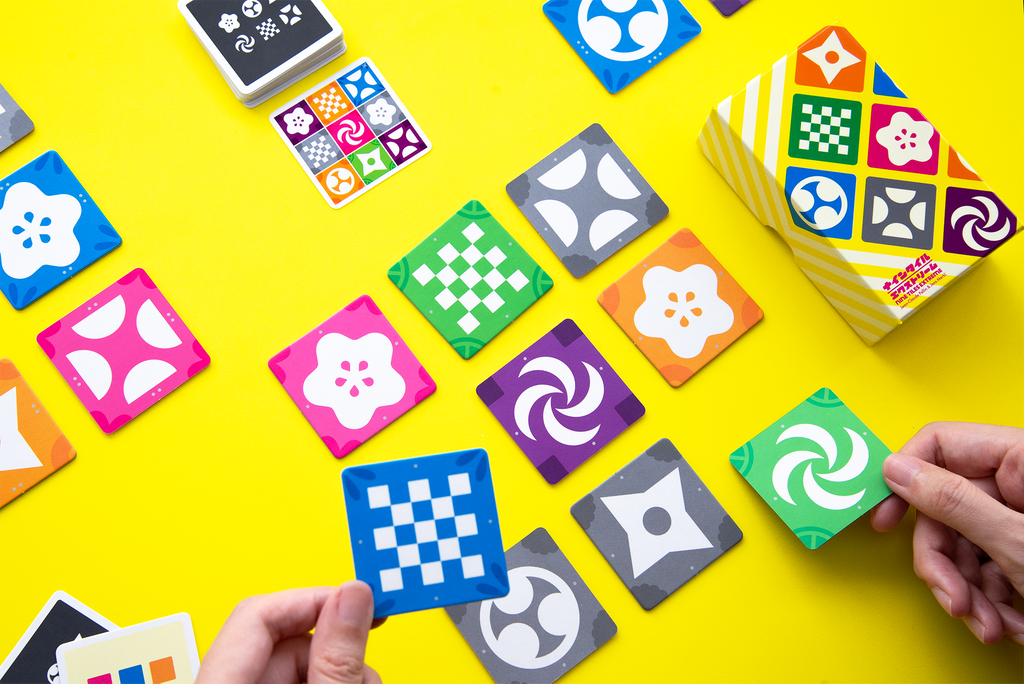
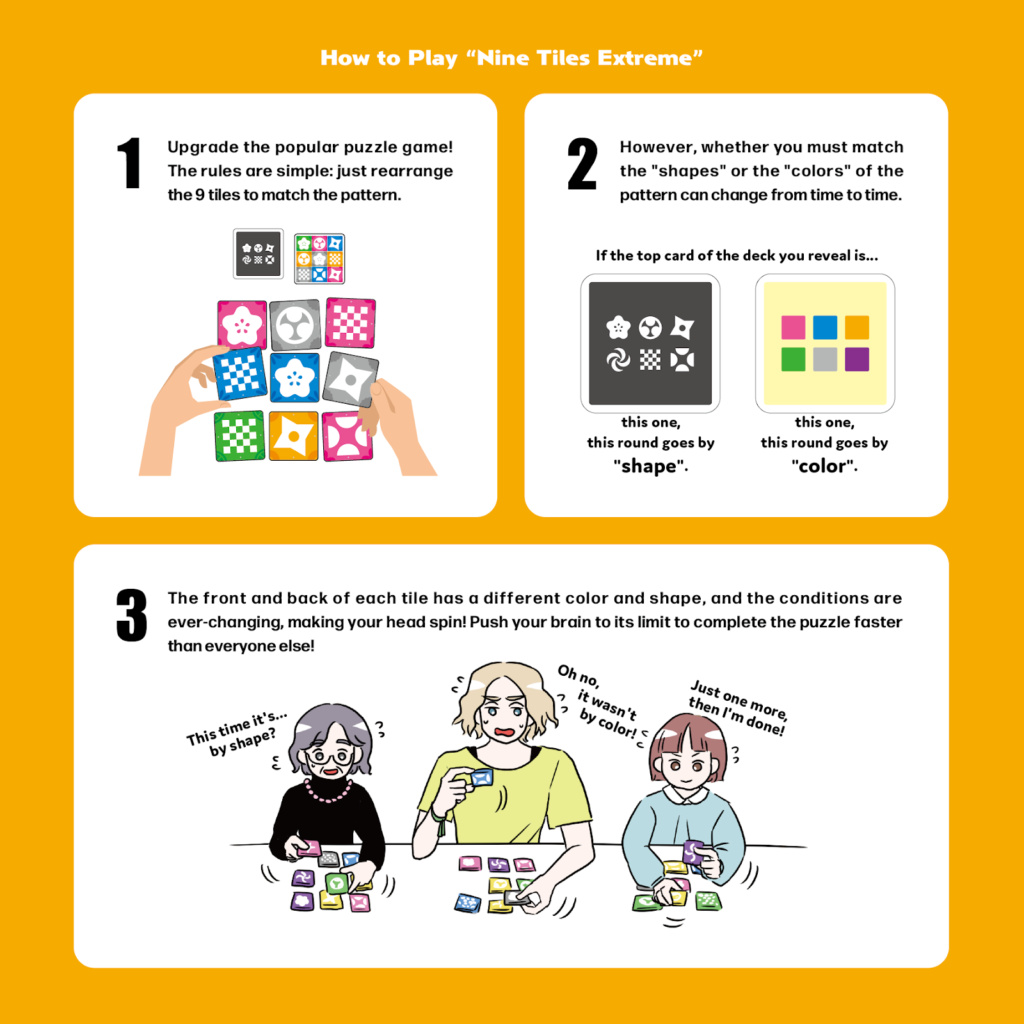
(Images were obtained from the publisher’s official Oink Games website)
Importantly, the relevance of Nine Tiles Extreme for adult learning lies not in claims of demonstrated cognitive improvement, but in the way its mechanics align with principles of andragogy and active learning. The game is self-directed, requiring players to choose and revise strategies independently. It is problem-centered rather than content-centered, articulating a clear goal to be achieved through experimentation and adaptation. Feedback is immediate, and failure is low-stakes, allowing players to reflect on strategies and adjust without external instruction. These characteristics mirror core assumptions of andragogy, particularly adults’ preference for autonomy, relevance, and experiential problem solving. In the hectic rhythms of professional and personal life, adults may not seek abstract cognitive training, but they do value short, energizing experiences that allow for competition, reflection, and social interaction. Nine Tiles Extreme can provide such an environment, offering a low-stakes but stimulating context in which players challenge themselves, test strategies, and reflect on their performance. In this way, the game offers not only cognitive challenges but also a form of active learning that acknowledges adults’ broader needs for engagement, relevance, and balance in lifelong learning.
From an active learning perspective, Nine Tiles Extreme also exemplifies how structured play can support engagement and participation. The game demands sustained attention, rapid decision-making, and interaction with others in a shared physical space. While empirical evidence linking this specific game to adult learning outcomes is not yet available, its design illustrates how board games can function as compact, time-efficient activities that embody active learning principles without requiring extensive resources or technological infrastructure.
Fast-paced, cognitively demanding games like Nine Tiles Extreme open opportunities for educators to explore how playful, low-stakes competition can enrich adult learning. Adults may not be seeking cognitive training in the abstract, but they often appreciate brief, energizing activities that are engaging, competitive, and social. When situated within andragogical principles, such games can be incorporated into professional workshops, training sessions, or community learning spaces as warm-up activities, decision-making exercises, or opportunities for reflection and discussion. Recognizing this potential broadens our definition of education to include playful, active methods that sustain curiosity, adaptability, and social connection across the lifespan.
In this sense, Nine Tiles Extreme serves as a conceptual bridge. It translates the cognitive benefits documented in children’s studies into a format that challenges adults, while also aligning with the self-directed, problem-centered, and experiential character of andragogy. Moreover, it exemplifies a broader design philosophy shared by its Japanese publisher, Oink Games, known for small, elegant titles that appear simple yet offer surprising depth. For example, in Deep Sea Adventure, players dive for treasure while sharing a single oxygen supply, forcing them to balance risk and reward and revealing how individual choices affect collective outcomes. Similarly, Startups has players invest in emerging companies, managing limited resources while anticipating others’ strategies. Both games can mirror real-world challenges such as interdependence, negotiation, and strategic planning through accessible and playful mechanics. Thus, while Nine Tiles Extreme is the focus here, it represents a wider approach to game design that merges playfulness with cognitive and social development.
In conclusion, Nine Tiles Extreme illustrates the potential of board games to serve as more than diversions. Positioned at the intersection of empirical evidence from children’s education and theoretical frameworks of adult learning, it highlights an underexplored but promising pathway for practice and research. By examining games like this, educators and scholars can begin to bridge the gap between evidence and theory, advancing our understanding of how playful, interactive tools can enrich lifelong learning.
IMPLICATIONS FOR PRACTICE AND FUTURE RESEARCH
The findings and theoretical connections outlined in this paper hold several implications for both educational practice and future research. For practitioners, integrating board games into adult learning environments offers a practical and cost-effective means of promoting engagement, collaboration, and cognitive flexibility. Games such as Nine Tiles Extreme illustrate how structured play can support cognitive challenge while also fostering social interaction and reflective thinking. Educators and facilitators in professional or community contexts could leverage such games as warm-ups, decision-making simulations, or team-building exercises, aligning them with andragogical principles that value autonomy, relevance, and problem-centered learning. In doing so, they could increase participation and motivation while also cultivating habits of adaptability and creative problem-solving that may transfer beyond the classroom.
From a research perspective, the parallels between findings in children’s cognitive development and adult learning theory open promising avenues for empirical study. Future work could investigate how board game interventions influence adults’ executive functioning, collaboration, and metacognitive awareness over time, as well as how these skills translate into workplace or lifelong learning outcomes. Longitudinal studies could also explore whether the motivational and social benefits observed in children persist when adapted for adult learners. By systematically examining these intersections, scholars can build a more integrated understanding of game-based learning across the lifespan, establishing board games not merely as pedagogical novelties but as enduring tools for cultivating adaptive, reflective, and collaborative learners in an era of rapid change.
WORKS CITED
Barabanova, Svetlana V., Nataliya V. Nikonova, Irina V. Pavlova, Rozalina V. Shagieva, and Maria S. Suntsova. “Using Active Learning Methods Within the Andragogical Paradigm.” The Impact of the 4th Industrial Revolution on Engineering Education, edited by Michael E. Auer et al., Advances in Intelligent Systems and Computing, vol. 1134, Springer, 2020, pp. 566–77. https://doi.org/10.1007/978-3-030-40274-7_54.
Barekat, Nima Asemani. “The Effect of Board Games on the Academic Achievement and Learning Motivation of Fourth-Grade Elementary Students.” International Journal of Elementary Education, vol. 12, no. 3, 2023, pp. 68–75. Science Publishing Group, https://doi.org/10.11648/j.ijeedu.20231203.13.
Boghian, Ioana, Venera-Mihaela Cojocariu, Carmen Violeta Popescu, and Liliana Mâţă. “Game-Based Learning: Using Board Games in Adult Education.” Journal of Educational Sciences and Psychology, vol. 9, no. 1, 2019, pp. 51–57.
Cravet, Elena, and Maria Carmen Usai. “A Short Game-Based Intervention for Enhancing Executive Functions at School: A Pilot Study.” Journal of Cognitive Enhancement, vol. 8, 2024, pp. 185–90. Springer Link, https://doi.org/10.1007/s41465-024-00301-5.
Vita-Barrull, Nuria, et al. “Do You Play in Class? Board Games to Promote Cognitive and Educational Development in Primary School: A Cluster Randomized Controlled Trial.” Learning and Instruction, vol. 93, 2024, Article 101946, Elsevier, https://doi.org/10.1016/j.learninstruc.2024.101946.
Deterding, Sebastian, Dan Dixon, Rilla Khaled, and Lennart Nacke. “From Game Design Elements to Gamefulness: Defining ‘Gamification.’” Proceedings of the 15th International Academic MindTrek Conference: Envisioning Future Media Environments, ACM, 2011, pp. 9–15. https://doi.org/10.1145/2181037.2181040.
Estrada-Plana, Verónica, et al. “Benefits of Playing at School: Filler Board Games Improve Visuospatial Memory and Mathematical Skills.” Brain Sciences, vol. 14, no. 7, 2024, article 642. MDPI, https://doi.org/10.3390/brainsci14070642.
Henschke, John A. “Beginnings of the History and Philosophy of Andragogy, 1833–2000.” Integrating Adult Learning and Technologies for Effective Education: Strategic Approaches, edited by Victor C. X. Wang, IGI Global, 2010, pp. 1–30. https://doi.org/10.4018/978-1-61520-694-0.ch001.
Knowles, Malcolm S., Elwood F. Holton III, and Richard A. Swanson. The Adult Learner: The Definitive Classic in Adult Education and Human Resource Development. 8th ed., Routledge, 2015. https://doi.org/10.4324/9781315816951.
Livingston, Manuel, and Denise Cummings-Clay. “Advancing Adult Learning Using Andragogic Instructional Practices.” International Journal of Multidisciplinary Perspectives in Higher Education, vol. 8, no. 1, 2023, pp. 29–53.
Noda, Shota, Kentaro Shirotsuki, and Mutsuhiro Nakao. “The Effectiveness of Intervention with Board Games: A Systematic Review.” BioPsychoSocial Medicine, vol. 13, 2019, article 22. BioMed Central, https://doi.org/10.1186/s13030-019-0164-1.
Plass, Jan L., Bruce D. Homer, and Charles K. Kinzer. “Foundations of Game-Based Learning.” Educational Psychologist, vol. 50, no. 4, 2015, pp. 258–283. https://doi.org/10.1080/00461520.2015.1122533.
Sandlin, Jennifer A., Robin Redmon Wright, and Carolyn Clark. “Reexamining Theories of Adult Learning and Adult Development Through the Lenses of Public Pedagogy.” Adult Education Quarterly, vol. 63, no. 1, 2013, pp. 3–23. https://doi.org/10.1177/0741713611415836.

Jenny Yanzhi Wang
Learning Designer
Columbia University
Jenny Wang is a designer and artist based in New York, originally from southeastern China. With a background in developmental psychology, game design, and learning sciences, she explores how play, creativity, and culture shape meaningful learning experiences. She is currently exploring how lightweight board games like Nine Tiles Extreme and similar fast-paced, social games can support cognitive flexibility and decision-making under pressure. Jenny is interested in how games can make learning more engaging and hands-on—especially for learners with diverse needs. Blending artistic expression with research and design, she creates educational experiences that invite curiosity, collaboration, and reflection. Her practice is shaped by her cross-cultural journey and a belief that learning can be both personal and shared. Through her work, she seeks to design educational experiences that are as imaginative and dynamic as the learners themselves.